"You shall love your neighbor as yourself." — Leviticus 19:18 · Matthew 22:39
For millions of Christians around the world, Bible reading follows a familiar pattern. A believer opens Scripture, reads a passage, reflects on how it applies to daily life, and moves on with the day.
Most never stop to ask a fundamental question: What if the people who wrote the Bible understood these passages very differently than we do today?
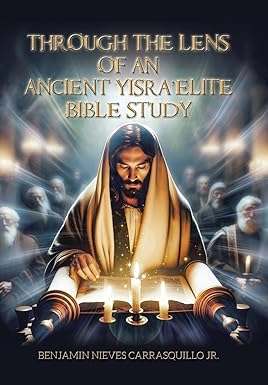
According to award-winning author Benjamin Nieves Carrasquillo Jr., that possibility deserves serious consideration.
A Journey That Began With Spiritual Frustration
Unlike many authors who begin through formal academic pursuits, Carrasquillo's path began with an uncomfortable feeling he could not ignore.
For years, he sat in church services, attended Bible studies, and pursued theological education. Outwardly, everything appeared normal. Internally, however, something felt incomplete — a growing sense that certain passages of Scripture were being forced into theological systems rather than allowed to speak for themselves.
I wasn't looking for a new doctrine. I wasn't trying to start an argument or challenge Christianity. I simply wanted to understand what the biblical authors were actually saying.
The Military Mindset That Shaped His Approach
Carrasquillo's background as a disabled U.S. military veteran played a significant role in shaping the way he approached biblical study. Military training teaches the importance of precision — a misunderstood command can alter an entire operation.
In military environments, words matter. Definitions matter. Context matters. The same principle, Carrasquillo believes, applies to Scripture. He wanted to understand not merely what a verse says in English, but what it communicated to the people who first heard it.
The Invisible Prism Through Which We Read Scripture
One of the most powerful illustrations in Carrasquillo's work is what he calls the "Western Prism." Every person sees the world through a lens shaped by culture, education, family, religion, media, and life experience.
When modern believers approach Scripture, they do so carrying assumptions about heaven and hell, the nature of the soul, salvation, authority, prophecy, judgment, and identity — many of which originate from centuries of philosophical development rather than directly from the worldview of ancient Yisra'el.
- The biblical authors thought communally rather than individualistically.
- They viewed covenant as central to identity.
- They understood honor and shame differently.
- Their language reflected concepts deeply rooted in an agricultural society.
Discovering the Ancient Yisra'elite Worldview
Determined to understand Scripture more accurately, Carrasquillo expanded his studies through the Israel Institute of Biblical Studies — pursuing Hebrew, Aramaic, Greek, biblical history, ancient customs, and cultural context.
The combined disciplines gradually revealed something profound: the Bible makes far more sense when read from within the worldview of the people who wrote it. Passages that once seemed confusing became clearer. Questions that had lingered for years began finding answers.
A Study Designed for Serious Readers
Through the Lens of an Ancient Yisra'elite Bible Study is not a quick devotional and not a surface-level commentary. Spanning 894 pages, the book represents years of research, study, and reflection.
Whether you are a pastor, ministry leader, Bible study teacher, seminary student, or simply a believer seeking a deeper understanding of Scripture, the book provides a comprehensive resource for examining the biblical text from its original context.
Book Details
- Hardcover
- 894 pages
- Softcover
- 894 pages
- Kindle eBook
- Available
- Audiobook
- In production
Where to Find the Book & Author
Perhaps the most important question is not whether we have been reading the Bible incorrectly. The question is whether we are willing to examine the lens through which we read it.
Because sometimes the greatest discoveries in Scripture are not found by reading new verses — they are found by seeing familiar verses in a way we never have before.
Want to be featured next? Book Ascendancy Community writes and publishes editorial-style spotlights for authors.
Apply for a Spotlight