For years, a body of poetry sat quietly inside Ken Hinkley's files. It was not assembled as a project and it was not written toward a deadline. It accumulated the way private writing often does: a poem at a time, over a long stretch of ordinary life, set down and then set aside.
Some of those pages held despair. Others held the sudden, unearned lift of joy. A few asked, plainly, where God had gone. Others answered with something closer to triumph. Taken together, they trace an emotional range modeled on the biblical Psalms, written, according to the collection's own synopsis, over years of reflection and prayer.
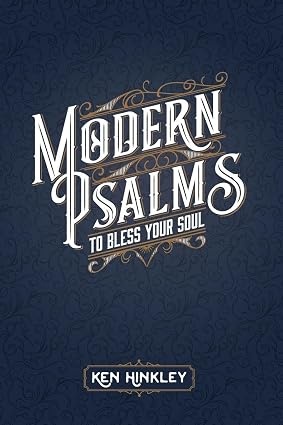
That collection has now become Modern Psalms, published by In the Name Publishing, a book of devotional verse paired with Scripture. But the more interesting story is not the publication itself. It is what came before it: years spent pastoring small churches in western Maine, more than three decades of teaching the Bible and leading discussion, a private habit of writing that stretches back to childhood, and the years the poems spent in a drawer before anyone decided they should exist for someone besides their author.
This feature is an attempt to understand that decision: not the marketing of a book, but the account, drawn from Hinkley's own words, of how a private collection of poems, shaped by years of reflection and prayer, came to be something a stranger might now hold in their hands.
A Collection Built on an Old Pattern
Modern Psalms takes its structure not from a theme or a season of life, but from the emotional honesty of the biblical Psalms themselves.
The biblical Psalms were never a single mood sustained across a hundred and fifty poems. They complain. They accuse. They praise. They sit in silence and they shout. That range is the model Modern Psalms borrows: a collection whose synopsis describes cries of despair, pleadings for understanding, questions about where God has gone, and, in the same pages, shouts of triumph.
The poems are not arranged in narrative order, and the book does not ask to be read front to back with a single argument in mind. Instead, each piece is paired with a corresponding passage of Scripture, a structural choice that positions the poems less as commentary on the Bible and more as a kind of ongoing conversation with it: one person's verse set beside the older verse that shaped it.
According to its own synopsis, the collection is offered as the product of many years of a life lived, and of experiences its author believes are shared by a great many Christians. It does not present itself as a memoir told in verse, nor as devotional instruction. It is closer to a record (of doubt, of gratitude, and of the space in between) left behind by someone who spent more than three decades teaching Scripture and, apparently, just as long writing his own response to it in private.
A poem for despair sits, in this collection, within reach of a poem for triumph: the same distance the Psalms themselves have always kept between lament and praise.
The Life Behind the Verse
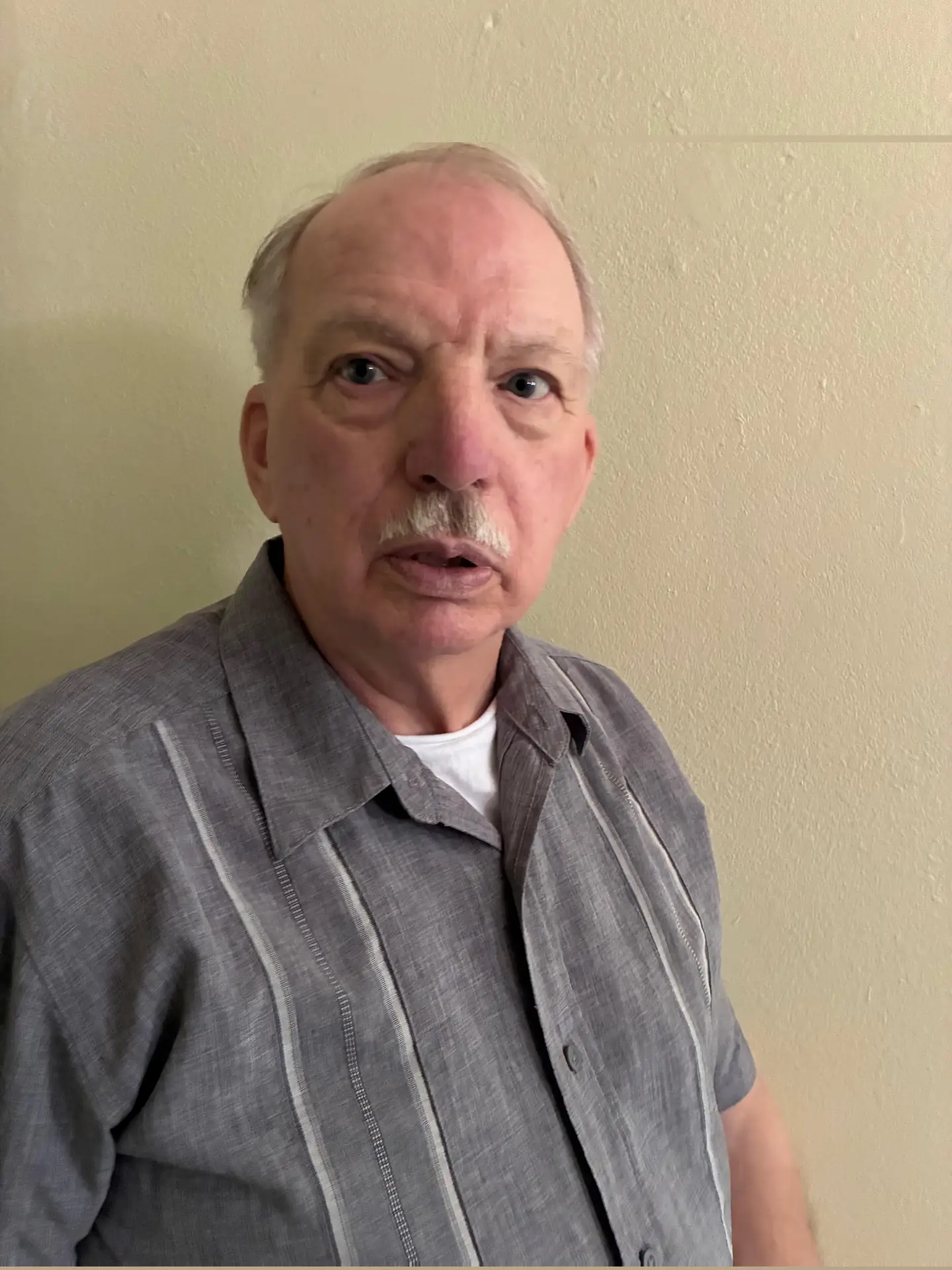
Ken Hinkley is a former pastor of small churches in western Maine, and for more than thirty years he has taught the Bible and led discussions on biblical topics: the kind of sustained, close reading of Scripture that shapes how a person thinks long after a sermon or a lesson has ended.
Writing came earlier than the pastorate, and has outlasted any single pulpit. From a young age, Hinkley has written both prose and poetry, and over the years the two have accumulated into a substantial private body of work, most of which, like the poems that became Modern Psalms, was never written with publication in mind.
He and his wife, Linda, now live in Oklahoma, where they are close to two daughters and their granddaughters. A son lives in Florida. Outside of writing, Hinkley has spent years working with his hands, favoring crafts made of wood: a different kind of patient, unhurried making, and perhaps not so different a temperament from the one that let a book of poems sit untouched for years before it was ready.
It is tempting to draw a straight line from pastor to poet, as though the second followed naturally from the first. The truth seems less tidy and more human: a life spent teaching others to sit with Scripture, alongside a private habit of writing that had nothing to do with anyone else, until eventually it did.
When Private Writing Became a Book
The plainest fact about Modern Psalms may also be its most revealing: the poems inside it are old. Not old in the sense of being dated or dusty, but old in the sense that they were written across years and then kept, unpublished, in Hinkley's files, for long enough that ‘eventually’ became the only honest word for when they might see daylight.
What changes when a piece of private writing is finally handed to someone else? It is a question with no single answer, but it is the right question to ask about this book. A poem written in a private moment of doubt is one kind of object. The same poem, printed, bound, and placed in a stranger's hands, is another. The words do not change. Everything around them does.
According to the collection's own synopsis, the poems were written over years of reflection and prayer, and they come from the heart rather than from any calculated design. Hinkley himself has said the decision to publish them was the result of much prayer and thought, and that he came to feel the poems should not remain hidden, believing they might bless other people much as they had shaped his own life.
Hinkley has not specified an exact date or a single moment when that decision was made, and this profile does not claim to know the specific prayer that tipped the balance. What he has described is the shape of the process: years of writing, years of reflection and prayer, and an eventual conviction that this particular set of poems should be shared. For a body of work built largely in private, that alone marks a significant turn.
The poems did not arrive quickly, and they were not published quickly either. Whatever finally moved them from a file drawer into print, it was not haste.
What the Book Offers the Person Holding It
Ken Hinkley has said he hopes readers find comfort, encouragement, and joy, and that one poem, at the right time, might speak directly to whoever is reading it.
The synopsis for Modern Psalms makes a careful claim, and it is worth reading closely. It does not promise that readers will feel better, or that their doubts will resolve. It offers something narrower: the idea that a soul searching for solace might find it in the knowledge that God is still there, arrived at not through argument, but through the company of poems that have already sat with despair, with pleading, and with the question of where God has gone.
That is a different kind of ambition than most devotional writing sets for itself. It does not ask a reader to arrive at a conclusion. It asks them to recognize something: the shape of a feeling they may already be carrying, given back to them in verse and set beside Scripture that has addressed that same feeling for thousands of years.
There is also, in the design of the book itself, a kind of built-in patience. Because the poems are not arranged to be read in a fixed order, and because each is paired with its own passage, the collection does not require a reader to move through it from beginning to end to find what they need. A single poem, encountered on a single difficult day, is allowed to do its work on its own.
The synopsis and the author are making two related but distinct claims. The synopsis describes what the collection contains and how it is built. Hinkley, in his own account, has been more direct about what he wants that collection to do: he has said he hopes it brings readers comfort, encouragement, and joy, and that perhaps one poem, more than the others, will stay with someone because it speaks to that person's own circumstances. Neither claim promises transformation. Both are more modest, and, for that reason, more believable.
- Solace, rather than resolution
- Recognition of shared experience
- Scripture placed alongside honest verse
- No fixed order: a poem can be found, not just read in sequence
- Comfort, encouragement, and joy
- One poem may speak directly to a reader's own circumstances
Faith, Experience, and Expression
Three threads run through everything gathered in this profile, and none of them make sense fully on their own. There is the pastor and Bible teacher, whose vocation kept him close to Scripture for decades. There is the writer, who was filling pages with prose and poetry long before there was a congregation to lead. And there is the private man, whose poems sat for years in his files, weighed in prayer and reflection, before Hinkley judged them ready for someone else to read.
It would be easy to flatten this into a simple equation (pastor plus poet equals devotional book), but the material available here resists that shortcut. Hinkley's years of Bible teaching gave him a framework for reading the Psalms as a model: not a genre to imitate stylistically, but a permission structure for what religious writing is allowed to contain. A Psalm can accuse God of absence in one verse and praise God's faithfulness in the next, and both are treated as legitimate prayer. That permission appears to be something close to what Hinkley extended to his own poems.
The years those poems spent in his files matter here too. They suggest a body of work that did not begin as a bid for an audience, but as something closer to a private practice, worked out over years between the writer and his own reflection and prayer. Publication did not change what the poems were. It changed who was allowed to encounter them.
That is, perhaps, the real subject of Modern Psalms: not a set of answers about God, but a demonstration of what it looks like when lived experience, biblical language, and years of private reflection are finally allowed to leave the room they were written in.
Book Details
- Title
- Modern Psalms: To Bless Your Soul
- Author
- Ken Hinkley
- Publisher
- In the Name Publishing
- Format
- Devotional poetry, paired with Scripture
- Structure
- Unordered collection; each poem paired with a related passage
- Range
- Despair, questioning, gratitude, and triumph
Return, for a moment, to where this profile began: a body of poetry, written across years and kept, unpublished, in Hinkley's files. That fact alone would make for an unremarkable story: most private writing stays exactly where it was written, and there is no obligation for it to do otherwise.
What makes Modern Psalms worth this closer look is the decision that followed: that these particular poems, shaped by years of reflection and prayer, should not remain hidden. It is a small decision in one sense: a manuscript submitted, a publisher found, a book printed. In another sense, it is the entire story this feature has been trying to tell. Private faith, held closely enough and long enough, was finally judged worth handing to someone else.
Readers who pick up this collection will not find a tidy resolution to the doubts it raises, and the book does not claim to offer one. What its synopsis promises instead is more modest and, perhaps, more honest: the possibility of solace, found in the company of verse that has already sat with despair and come out the other side toward triumph, and the knowledge, as the synopsis puts it, that God is still there.
These poems spent years in a file before their author decided they should not remain hidden. What readers now hold is the result of that decision: nothing more certain than solace, offered honestly.
Want to be featured next? Book Ascendancy Community writes and publishes editorial-style spotlights for authors.
Apply for a Spotlight